
It’s been a year and a half since “There once was–There is no more–There is” began its festival journey — and what a journey it has been. What started as an intimate, poetic story about memory, resilience, and healing grew into something larger: a conversation about children’s mental health, emotional literacy, and the role art can play in supporting well-being.
Over the past 18 months, the film has travelled to 42 film festivals worldwide. It’s been screened in Europe, Asia, North America, and Australia — in programs dedicated to animation, youth audiences, Jewish heritage, and, importantly, mental health education. Along the way, the film received eight awards and special mentions, including from:
- Chinh Youth Film Festival (Delhi, India)
- Anatolian Film Awards (Istanbul, Turkey)
- Madras Independent Film Festival (Madras, India)
- International Public Health Film Competition (Oxford, UK)
- Festiwal Animacji O!Pla (Poland)
- Multicultural Mental Health Film Festival (South Yarra, Australia)
- KIDS International Family Film Festival (Gilroy, USA)
- Chinh India Kids Film Festival (New Delhi, India)
Each recognition means the world to us — not only as filmmakers but as educators and advocates for emotional well-being.
Why Mental Health Education Matters — Now More Than Ever
During the festivals, one theme kept resurfacing: mental health is not an optional conversation. It’s an urgent one. According to the World Health Organization, depression and anxiety have risen by nearly 25% in recent years. One in seven children globally experiences a mental health disorder. Suicide is among the leading causes of death for young people. Institutions across the world — from WHO to UNICEF — warn that we are facing a long-term crisis that requires systemic solutions, prevention programs, and accessible education.
Yet psychological education for children remains inconsistent and, in many countries, insufficient. This is where storytelling steps in. Films can translate abstract emotional concepts into experiences children understand: loss, fear, self-doubt, resilience, the need for connection. They model language for emotions. They open space for conversations families often avoid. They normalize vulnerability and show young viewers that mental struggles don’t make them “broken” — they make them human.
How Films Can Support Mental Health Education and Healthcare
Educational films do not need to be instructional videos. They can remain artistic, symbolic, layered, and emotionally rich — and still play a crucial educational role.
Here are a few ways in which cinema can support mental health promotion:
- Emotional Literacy Through Story
Children often understand feelings more easily when they see them embodied by characters. Films help them name emotions, decode internal states, and recognize that others feel the same.
- Preventive Education
A well-crafted film can become a natural introduction to topics such as stress, grief, trauma, self-esteem, or coping strategies — before a crisis emerges.
- Support for Parents, Teachers, and Healthcare Workers
Animated or narrative stories can be used in:
- school mental health programs
- therapeutic sessions
- public health campaigns
- hospital settings
- community workshops
They create a safe, accessible starting point for dialogue.
- Reducing Stigma
Artistic storytelling humanizes mental health struggles. When children see them portrayed with empathy rather than fear, stigma decreases — not only for them, but for their families and teachers.
The Artistic Side Still Matters
What encourages us the most is that There once was–There is no more–There is has been embraced not only in health-oriented festivals but also in purely artistic and animated contexts. This proves that educational films don’t need to look like “educational films” — they can remain full-bodied works of art.
We believe strongly that beauty and meaning can coexist with mental health advocacy.
A poetic image can teach as much as a textbook paragraph.
A well-placed silence can be more therapeutic than a diagram.
A story can stay with a child long after a workshop is forgotten.
Looking Ahead
As the film continues its journey, we remain deeply grateful for every screening, discussion, and message from audiences around the world. These past 18 months have shown us that there is a real, global hunger for meaningful, empathetic stories that support the emotional lives of children and families.
And we are not done yet.
If the world needs mental health education — and it does — then it also needs stories.
Stories that comfort.
Stories that illuminate.
Stories that help young people name the shadows and search for light.
We are proud that “There once was–There is no more–There is” has become one of those stories.
Watch our film “There once was–There is no more–There is”
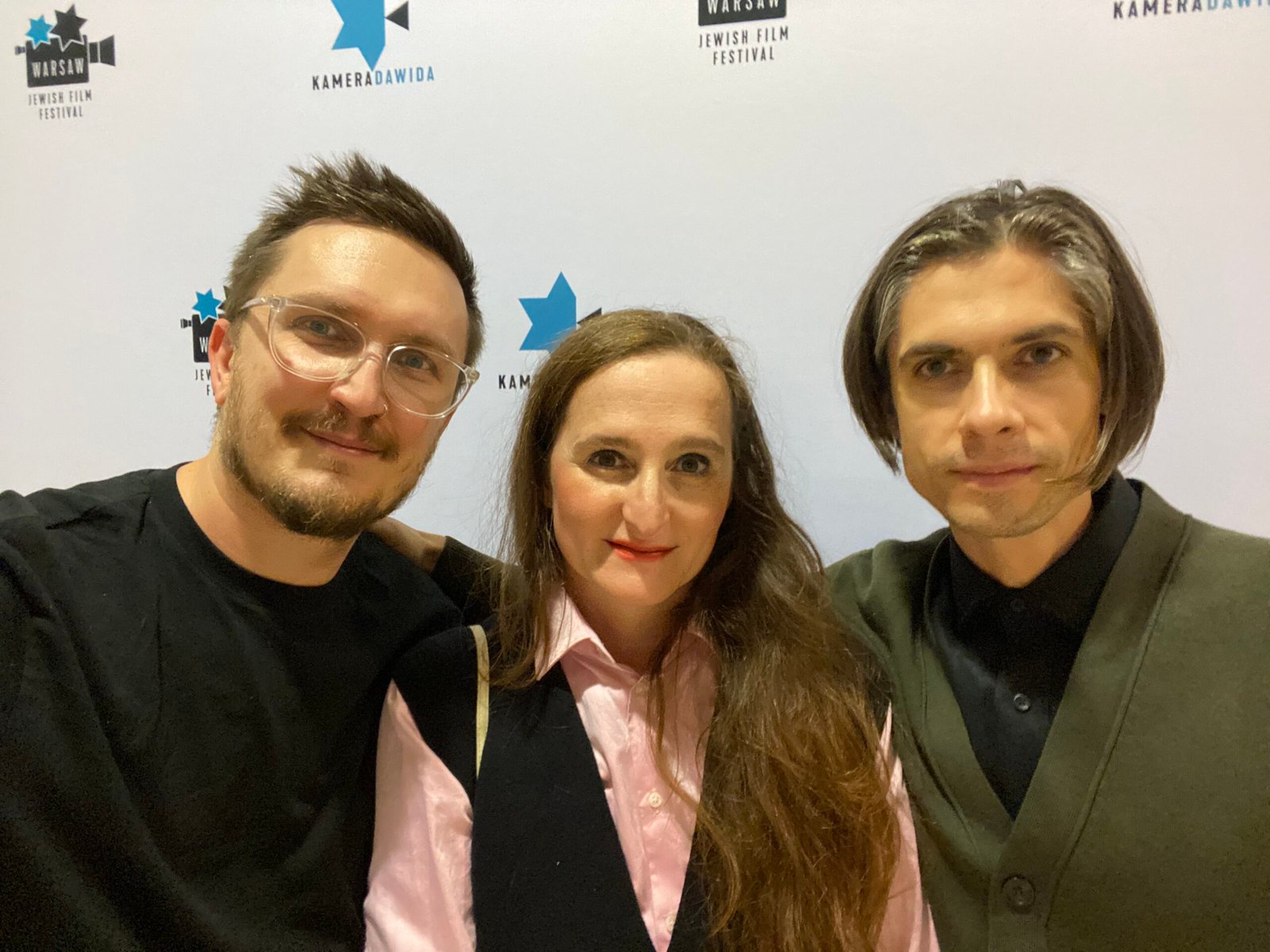
In the photograph: standing from left to right: Łukasz Kamil Kamiński (Co-Director), Marta Eichelberger-Jankowska (Expert Consultant) and Maciej Eichelberger.
The photo was taken during the 16th Warsaw Jewish Film Festival (Warsaw, Poland), where the animation was screened as part of the “Warsaw Jewish Film Festival Shorts: Fiction” section.